
 36215.jpg
21 Seiten, PDF-E-Book
Erschienen: März 2026
Bestell-Nr.: 36215
https://doi.org/10.30820/0743-4804-2026-36-87
Sergey Kamratov
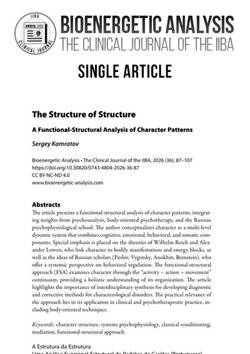
The Structure of Structure (PDF)
A Functional-Structural Analysis of Character Patterns
Sofortdownload
Dies ist ein E-Book. Unsere E-Books sind mit einem personalisierten Wasserzeichen versehen,
jedoch frei von weiteren technischen Schutzmaßnahmen (»DRM«).
Erfahren Sie hier mehr zu den Datei-Formaten.
Der Artikel präsentiert eine funktional-strukturelle Analyse von Charaktermustern und integriert Erkenntnisse aus der Psychoanalyse, der körperorientierten Psychotherapie und der russischen psychophysiologischen Schule. Der Autor konzeptualisiert den Charakter als ein mehrstufiges dynamisches System, das kognitive, emotionale, verhaltensbezogene und somatische Komponenten vereint. Besonderes Augenmerk liegt auf den Theorien von Wilhelm Reich und Alexander Lowen, die den Charakter mit körperlichen Manifestationen und Energieblockaden verknüpfen, sowie auf den Ideen russischer Gelehrter (Pawlow, Wygotski, Anochin, Bernstein), die eine systemische Perspektive auf die Verhaltensregulation bieten. Der funktional-strukturelle Ansatz (FSA) untersucht den Charakter entlang des Kontinuums »Aktivität – Handlung – Bewegung« und ermöglicht so ein ganzheitliches Verständnis seiner Organisation. Der Artikel unterstreicht die Bedeutung der interdisziplinären Synthese für die Entwicklung diagnostischer und therapeutischer Methoden bei charakterologischen Störungen. Die praktische Relevanz des Ansatzes liegt in seiner Anwendung in der klinischen und psychotherapeutischen Praxis, einschließlich körperorientierter Techniken.
Abstract:
The article presents a functional-structural analysis of character patterns, integrating insights from psychoanalysis, body-oriented psychotherapy, and the Russian psychophysiological school. The author conceptualizes character as a multi-level dynamic system that combines cognitive, emotional, behavioral, and somatic components. Special emphasis is placed on the theories of Wilhelm Reich and Alexander Lowen, who link character to bodily manifestations and energy blocks, as well as the ideas of Russian scholars (Pavlov, Vygotsky, Anokhin, Bernstein), who offer a systemic perspective on behavioral regulation. The functional-structural approach (FSA) examines character through the «activity – action – movement” continuum, providing a holistic understanding of its organization. The article highlights the importance of interdisciplinary synthesis for developing diagnostic and corrective methods for characterological disorders. The practical relevance of the approach lies in its application in clinical and psychotherapeutic practice, including body-oriented techniques.
Abstract:
Cet article présente une analyse fonctionnelle et structurale des schémas de personnalité, intégrant les apports de la psychanalyse, des psychothérapies corporelles et de l’école psychophysiologique russe. L’auteur conçoit la personnalité comme un système dynamique à plusieurs niveaux, combinant des composantes cognitives, émotionnelles, comportementales et somatiques. Une attention particulière est portée aux théories de Wilhelm Reich et Alexander Lowen, qui relient la personnalité aux manifestations corporelles et aux blocages énergétiques, ainsi qu’aux idées de chercheurs russes (Pavlov, Vygotsky, Anokhin, Bernstein), qui offrent une perspective systémique sur la régulation comportementale. L’approche fonctionnelle et structurale (AFS) examine la personnalité à travers le continuum «activité – action – mouvement”, offrant une compréhension holistique de son organisation. L’article souligne l’importance de la synthèse interdisciplinaire pour le développement de méthodes diagnostiques et correctives des troubles de la personnalité. La pertinence pratique de cette approche réside dans son application en pratique clinique et psychothérapeutique, notamment dans le cadre de techniques corporelles.
Abstract:
L’articolo presenta un’analisi funzionale-strutturale dei modelli caratteriali, integrando intuizioni provenienti dalla psicoanalisi, dalla psicoterapia ad orientamento corporeo e dalla scuola psicofisiologica russa. L’autore concettualizza il carattere come un sistema dinamico multilivello che combina componenti cognitive, emotive, comportamentali e somatiche. Particolare enfasi è posta sulle teorie di Wilhelm Reich e Alexander Lowen, che collegano il carattere alle manifestazioni corporee e ai blocchi energetici, nonché sulle idee degli studiosi russi (Pavlov, Vygotskij, Anokhin, Bernstein), che offrono una prospettiva sistemica sulla regolazione comportamentale. L’approccio funzionale-strutturale (FSA) esamina il carattere attraverso il continuum «attività-azione-movimento”, fornendo una comprensione olistica della sua organizzazione. L’articolo sottolinea l’importanza della sintesi interdisciplinare per lo sviluppo di metodi diagnostici e correttivi per i disturbi caratteriali. La rilevanza pratica dell‘approccio risiede nella sua applicazione nella pratica clinica e psicoterapeutica, incluse le tecniche ad orientamento corporeo.
Abstract:
The article presents a functional-structural analysis of character patterns, integrating insights from psychoanalysis, body-oriented psychotherapy, and the Russian psychophysiological school. The author conceptualizes character as a multi-level dynamic system that combines cognitive, emotional, behavioral, and somatic components. Special emphasis is placed on the theories of Wilhelm Reich and Alexander Lowen, who link character to bodily manifestations and energy blocks, as well as the ideas of Russian scholars (Pavlov, Vygotsky, Anokhin, Bernstein), who offer a systemic perspective on behavioral regulation. The functional-structural approach (FSA) examines character through the «activity – action – movement” continuum, providing a holistic understanding of its organization. The article highlights the importance of interdisciplinary synthesis for developing diagnostic and corrective methods for characterological disorders. The practical relevance of the approach lies in its application in clinical and psychotherapeutic practice, including body-oriented techniques.
Abstract:
Cet article présente une analyse fonctionnelle et structurale des schémas de personnalité, intégrant les apports de la psychanalyse, des psychothérapies corporelles et de l’école psychophysiologique russe. L’auteur conçoit la personnalité comme un système dynamique à plusieurs niveaux, combinant des composantes cognitives, émotionnelles, comportementales et somatiques. Une attention particulière est portée aux théories de Wilhelm Reich et Alexander Lowen, qui relient la personnalité aux manifestations corporelles et aux blocages énergétiques, ainsi qu’aux idées de chercheurs russes (Pavlov, Vygotsky, Anokhin, Bernstein), qui offrent une perspective systémique sur la régulation comportementale. L’approche fonctionnelle et structurale (AFS) examine la personnalité à travers le continuum «activité – action – mouvement”, offrant une compréhension holistique de son organisation. L’article souligne l’importance de la synthèse interdisciplinaire pour le développement de méthodes diagnostiques et correctives des troubles de la personnalité. La pertinence pratique de cette approche réside dans son application en pratique clinique et psychothérapeutique, notamment dans le cadre de techniques corporelles.
Abstract:
L’articolo presenta un’analisi funzionale-strutturale dei modelli caratteriali, integrando intuizioni provenienti dalla psicoanalisi, dalla psicoterapia ad orientamento corporeo e dalla scuola psicofisiologica russa. L’autore concettualizza il carattere come un sistema dinamico multilivello che combina componenti cognitive, emotive, comportamentali e somatiche. Particolare enfasi è posta sulle teorie di Wilhelm Reich e Alexander Lowen, che collegano il carattere alle manifestazioni corporee e ai blocchi energetici, nonché sulle idee degli studiosi russi (Pavlov, Vygotskij, Anokhin, Bernstein), che offrono una prospettiva sistemica sulla regolazione comportamentale. L’approccio funzionale-strutturale (FSA) esamina il carattere attraverso il continuum «attività-azione-movimento”, fornendo una comprensione olistica della sua organizzazione. L’articolo sottolinea l’importanza della sintesi interdisciplinare per lo sviluppo di metodi diagnostici e correttivi per i disturbi caratteriali. La rilevanza pratica dell‘approccio risiede nella sua applicazione nella pratica clinica e psicoterapeutica, incluse le tecniche ad orientamento corporeo.
Maria Rosaria FiloniS. 7–9Editorial Note (PDF)
Maria Rosaria Filoni, Garry Cockburn, Scott Baum & Yael Harel S. 11–65The Uniqueness of Bioenergetic Analysis (PDF)
Atlanta, USA, October 8-12, 2025John CongerS. 67–86Winnicott’s translation of Reich (PDF)
Orgastic potency and the depressive positionSergey KamratovS. 87–107The Structure of Structure (PDF)
A Functional-Structural Analysis of Character PatternsCamila MacedoS. 109–126Adolescence and the clinical work of bioenergetics today (PDF)
Léia M. CardenutoS. 127–150Impulsive/Compulsive Personalities (PDF)
How We Hear and Understand Them in Our Narcissistic SocietyMaria Rosaria FiloniS. 151–152Book review of: Vincentia Schroeter (2025). Babymaking (PDF)
Maria Rosaria FiloniS. 152–153Book review of: Leslie Ann Costello (2025). Helping Mothers, Helping Babies (PDF)
Maria Rosaria Filoni, Garry Cockburn, Scott Baum & Yael Harel S. 11–65The Uniqueness of Bioenergetic Analysis (PDF)
Atlanta, USA, October 8-12, 2025John CongerS. 67–86Winnicott’s translation of Reich (PDF)
Orgastic potency and the depressive positionSergey KamratovS. 87–107The Structure of Structure (PDF)
A Functional-Structural Analysis of Character PatternsCamila MacedoS. 109–126Adolescence and the clinical work of bioenergetics today (PDF)
Léia M. CardenutoS. 127–150Impulsive/Compulsive Personalities (PDF)
How We Hear and Understand Them in Our Narcissistic SocietyMaria Rosaria FiloniS. 151–152Book review of: Vincentia Schroeter (2025). Babymaking (PDF)
Maria Rosaria FiloniS. 152–153Book review of: Leslie Ann Costello (2025). Helping Mothers, Helping Babies (PDF)